
More Than One Way to Skin a Cat
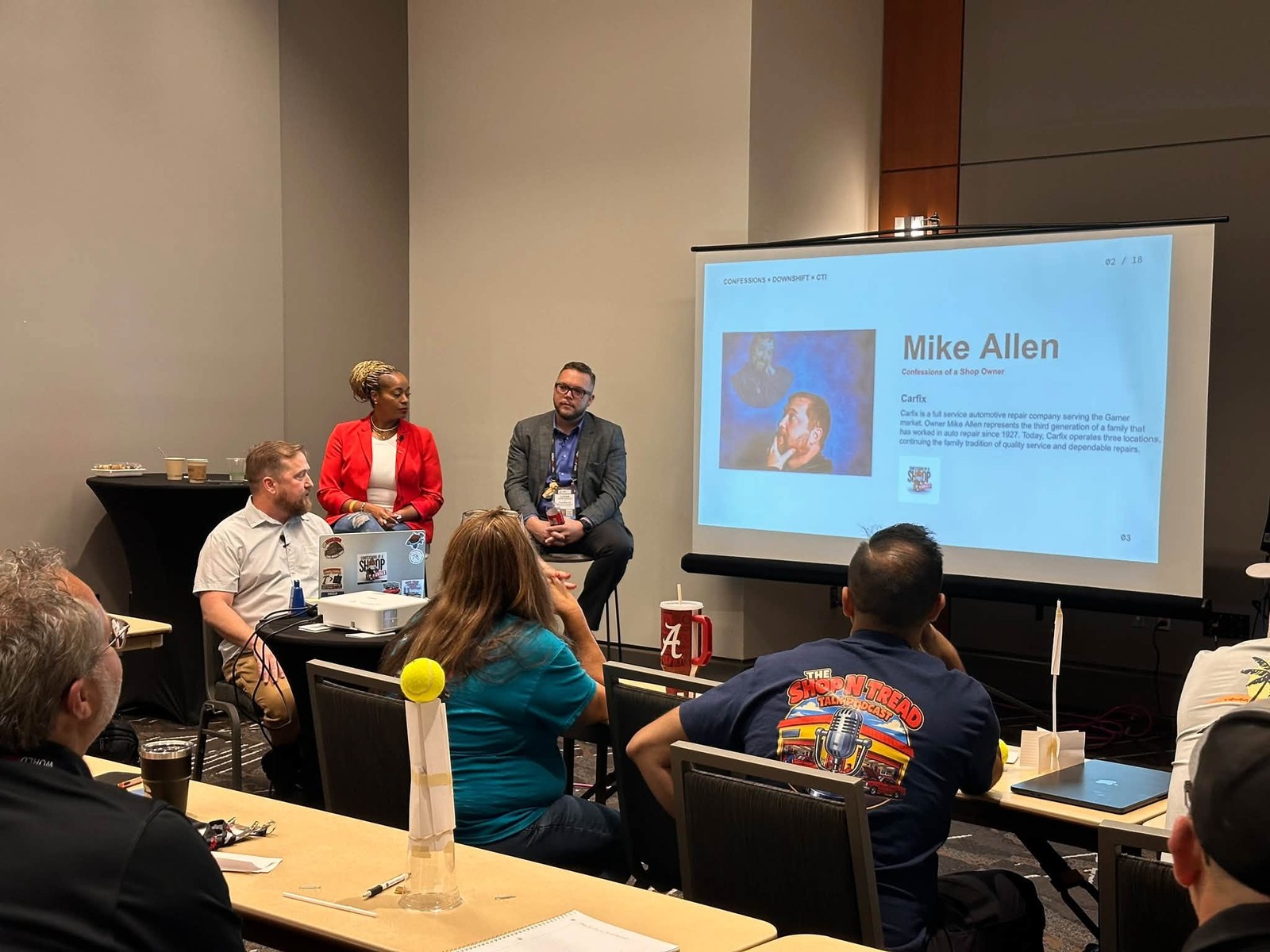
Most mornings start the same way. You’re scrolling the comments on some shop owner Facebook post that was clearly built to start a fight. And if you scroll far enough, there’s a good chance you’ll find Mike Allen, Tonnika Haynes, or Lucas Underwood somewhere in the thread.
By comment forty, people are at each other’s throats. Somebody’s charging too much. Somebody’s giving it away. Somebody’s apparently the reason the whole industry is broken. And everybody is very sure they’re right.
But are they? Is anybody?
That’s what the owners-only session at ASTA this year set out to answer. Mike, Tonnika, and Lucas took the questions that usually live in the comment section, the ones we argue about and don’t always have answers to, and put them in front of a room full of owners who run their shops every which way.
Surprise: there is no right answer. There’s only the one that works for your shop.
And if you haven’t figured it out, we’re one of them.
Now, if you weren’t in the room, or you were and forgot everything the minute you got home, make some coffee and get ready for an in-depth read. You’ll walk away with net new information, not the same stuff you’ve heard a hundred times. Here’s where we’re headed:
Who’s at the front of the room
Tonnika Haynes
Grew up in it.
Shop Brown's Automotive, Chapel Hill NC
Podcast Downshift with Tonnika
Mike Allen
Got pulled back into it.
Shop CarFix, Raleigh metro
Podcast Confessions of a Shop Owner
Lucas Underwood
Almost walked out of it.
Shop L&N Performance Auto Repair, Blowing Rock NC
Podcast Changing the Industry
Tonnika grew up in the shop. She’s second generation at Brown’s Automotive in Chapel Hill, and the only one of the three who has spent her whole career in automotive.
Mike never planned on any of this. In college he had other ideas, then found himself pulled back to work next to his dad. He bought his dad out in 2016 and now runs CarFix locations across the Raleigh metro.
Lucas came from a family of small businesses, a tourist attraction among them, and nothing with a lift in it. He opened a diesel shop right around the 2008 recession, and by 2016 he was done. He came home, told his wife he was finished being an owner, and decided to just be the best tech he could be. Then he wandered into an ASTA small enough that attendance was in the double digits and signed up for tech classes. Somebody pulled him aside and asked why a shop owner was sitting in tech classes, then walked him into sessions with Rick White and Maylan Newton. He left knowing he had no idea how to run a shop, and that for the first time, he could learn. Today he owns L&N Performance Auto Repair in Blowing Rock, North Carolina.
One grew up in it, one got pulled back into it, and one almost walked out of it. Of course they don’t agree.
Mike set the ground rules before anybody could start swinging. Take care of your people. Take care of your community. Be ethical. Be profitable. After that, do what works for you. There’s more than one way to skin a cat.
01Should you ever give it away?
Mike gives away the first hour of diag. When somebody in the room asked, just to be sure, whether he really does, he said, “I am the problem in this industry.”
"I am the problem in this industry."
Before you type your reply, hear the math. He took a year of diag fees at one store, divided it by billed hours, and got about eleven bucks an hour. So he raised his labor rate thirteen. The tech still gets paid for the hour, anything past it gets documented and charged, and it never goes in an ad. An every door direct mailer taught him that last one by filling his lot with people who just wanted to know how bad it was.
What he’s buying is Mrs. Jones: new in town, check engine light on, phone in hand. One shop tells her $196 and next Thursday. Mike’s shop tells her to bring it in now for a written estimate at no charge. If the building’s clean and the people are nice, that’s a three-car family for the next five years.
Then he admitted his store near NC State quit doing it a month ago. Thirty zero-dollar tickets in a month, at a store that was already booking out, with college kids in beaters getting estimates in the thousands. Matt Lofton had been beating him over the head with the numbers until he listened.
That’s the tell. Free diag isn’t a belief system, it’s a capacity decision. Lucas has lived both sides of it. With three bays and three months of backlog, he’d never touch it. With ten bays and bills due, he’d do whatever it took. Chris Gayne runs Dale County Diesel in Daleville, Alabama, sees around fifty cars a month at a $3,500 ARO, and has people driving past other shops to get to him. He doesn’t give anything away. His version of helping the community is being the shop they can count on.
Free diag is a capacity decision, not a belief
Bays booked out
Don't give it away
It just fills the lot with zero-dollar tickets. Chris never discounts. Mike pulled it the month his NC State store hit thirty free tickets.
Bays open, need volume
A giveaway can be a tool
Mrs. Jones becomes a five-year customer. With rules: know what the free hour costs, bill anything past it, keep it out of the ad, and stop the moment you fill up.
The math About $11/hr in diag fees ÷ billed hours, so Mike raised his labor rate $13. The free hour isn't free; it's priced into the rate.
Tonnika’s advice took five words. Do what makes sense for your shop.
Notice what Mike’s free diag and Chris’s no-discount shop have in common. Neither one is a guess. Mike knows exactly what the free hour costs him and pulled it the moment a store filled up. Chris knows his bays are full without it.
02What should you charge?
At some point the room admitted something out loud. A lot of us priced ourselves against the dealership out of guilt.
One owner laid it out: three years in, $39 oil changes, everything set just under the dealer, because that’s the story everybody tells about the dealer. Lucas calls it Oreo pricing. You look at the shop above you and the shop below you, land in the middle, and never once look at your own books. Tonnika’s version was sharper. You’re protecting everybody’s wallet except yours.
"You're protecting everybody's wallet except yours."
Then came the best coaching trick of the day. A coach got tired of watching an owner discount, so he told them to keep $200 cash in their wallet and pay every discount out of it, by hand, across the counter. The owner said they didn’t have $200. That was the point.
Another owner used to run eighty ROs a month out of a one-bay, 900 square foot shop at about $250 a ticket. Their mastermind group asked why the parts margin was so thin. The answer was timing belts on dealer parts, so the price went from $1,100 to $1,800 with a three-year, 36,000-mile warranty attached. They were terrified. Now it’s forty to fifty cars a month at around $680. Fewer cars. Fewer headaches. More money.
One owner's repricing, by the numbers
Before
80ROs / mo
After
40–50ROs / mo
≈ $20k → $31k a month in sales, on far fewer cars. (Monthly ROs × average ticket.)
For anyone about to type “that won’t work in my market,” Mike offered Matt Lofton. His shop sits in a North Carolina town where household income is around $38,000, and it still averages about a thousand dollars a ticket. Jim, a longtime attendee, added the kicker: national median household income is somewhere around $37,000. Your market is probably more average than you think.
Tonnika’s number was the one people wrote down. Twenty percent net. Get there, then give back all you want. Oxygen mask first.
The owner with the $39 oil changes summed up the whole conversation: “I wish I didn’t take till September to figure it out.”
Every story in this section has the same turning point. Somebody finally looked at their own numbers instead of somebody else’s price.
03How do you find techs?
If pricing was the confession, recruiting is where the gloves came off.
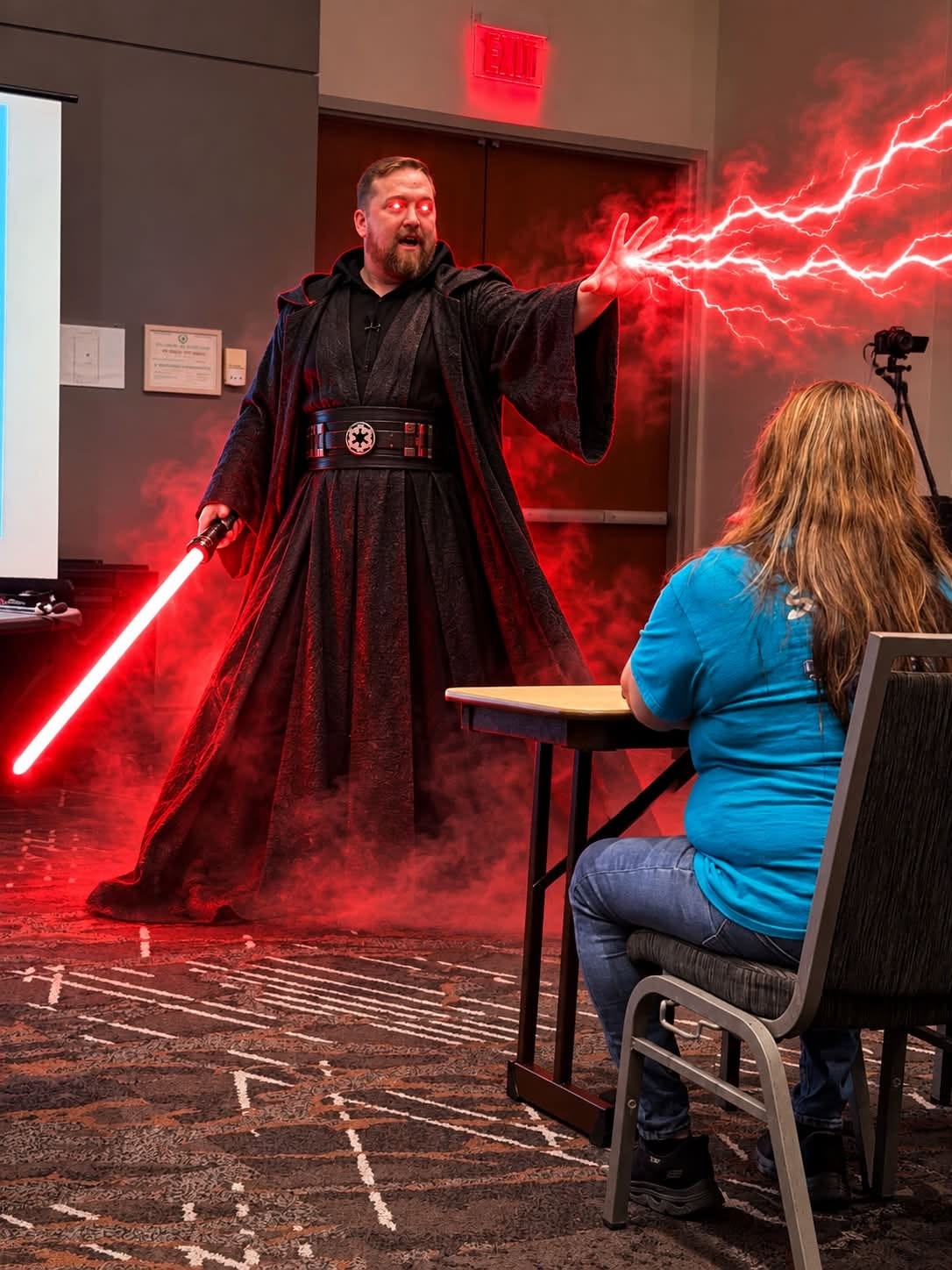
Mike remembers when coaching companies told shops to mine the tool trucks. The tool guy runs a scan tool giveaway, every tech fills out an entry, and suddenly somebody has a list. Everybody did it, so it stopped working. Now there are agencies promising to walk into other shops and pull techs straight out of the bays, and offers going around with signing bonuses near $25,000.
How you respond to that says a lot about you, and these two respond very differently.
Lucas sits down with the tech. When one of his guys brought him an offer that looked a lot bigger, they laid the two side by side. The shiny new job turned out to be 1099 with no benefits. Conversation over.
Mike trespasses the recruiter. He’ll go after techs at dealerships and chains, he said, just not other independents. Then, in the middle of making his case, he asked the room whether that’s still stealing.
Then he told the best story of the day.
Back when Mike was president of ASTA, a member shop tried to recruit one of his techs. His response, which he’ll happily call amateur now, was to call that shop and try to recruit their service advisor. The advisor wasn’t interested and told his boss, and his boss put Mike on blast. The president of the trade association, poaching from his own members. The internet did what the internet does.
Mike apologized publicly and took the guy to lunch. Today they help each other vet talent, whichever direction it’s moving.
That one story holds both versions of this industry: the comment section version and the real one.
For less dramatic recruiting, Mike’s tactics are simple. Hit Harbor Freight on a Saturday afternoon, where entry-level techs shop for tools after their shift, still in uniform. Find the lunch spot near the dealership and eat there. Lucas is in rural North Carolina, where the local talent is thin, so he recruits nationally.
Lucas’s kitchen-table talk and Mike’s trespass order look like opposites, but they’re protecting the same thing: a team that doesn’t want to leave. Mike said it plainly. Culture is what brings people in and what keeps them there.
"Culture is what brings people in and what keeps them there."
04How do you pay them?
Comp plans got a whole hour, which tells you where owners’ heads are right now.
Mike starts by asking candidates how they want to be paid: hourly, flat rate, or salary. Lucas runs hybrid for the stability. Mike will pay six-figure salaries, but every one comes with a written minimum level of acceptable performance. His example was $120,000 a year for at least 45 hours worked a week. Dip below that and it’s a conversation. That standard is how people get promoted, demoted, or let go.
Most of his techs get a daily minimum guarantee, a base rate per billed hour that climbs at 40, 45, and 50 hours. His advisors get a base wage and a tiered share of shop-wide gross profit. That share only pays out if the store at least breaks even that week. Low performers either get carried up by the team or find their own way out.
Entry-level techs are hourly with spiffs on wipers and tires, and Mike admitted he doesn’t love that setup.
How Mike pays, by role
Techs
A daily minimum guarantee, plus a base rate per billed hour that steps up at 40, 45, and 50 hours.
Service advisors
A base wage, plus a tiered share of shop-wide gross profit, paid only in weeks the store at least breaks even.
Entry-level
Hourly, with spiffs on wipers and tires. (Even Mike admits he doesn't love it.)
Salary, if they want it
Six figures on the table, each with a written minimum. His example: $120,000 a year for at least 45 hours a week.
Two more worth stealing. Put the number in the job ad; if you’ll pay $150,000, say $150,000. And offer the benefits a real employer offers, because you’re competing with every job in town, not just the shop down the street. Mike also has every new hire fill out a getting-to-know-you sheet so the team meets a person, not a position.
Hourly, flat rate, salary, hybrid: the room ran all of them. What the plans that work have in common is that nobody has to guess. The number is in the ad, the standard is in writing, and the bonus is tied to something the whole team can see.
05How do you market without a coupon?
Marketing is what we do for a living, so this is where we leaned in. The best ideas in the room cost almost nothing.
Mike brings giant Jenga to community events. Beat Mike, win something. He doesn’t mind losing, because every game is a few minutes to get to know somebody from the community, find out what they drive, and figure out how CarFix can take care of them. At job fairs the prize is a pair of safety glasses, and the conversation is about how school’s going.
Brandon Miller of Miller Auto in Omro, Wisconsin had another story of the day. Highway construction shut down the road in front of his shop in March. He called the state, the county, and the sheriff, and started posting a weekly road report. About 350 Facebook followers became nearly 1,000 in three weeks, all local. Then he borrowed Brian Walker’s advice that a shop podcast shouldn’t be about the shop, launched Inside Omro, and interviewed fifteen local businesses. Customers now tell him at the counter that’s why they came in. None of it was his idea, he said. He just did it.
Tonnika’s playbook is to show your techs as people, so customers understand who they’re paying. It’s free, and it doesn’t have to look professional.
Lucas added the gut check. Fixing the car right isn’t your marketing, it’s the minimum. Perfect popcorn won’t save a bad movie.
"Perfect popcorn won't save a bad movie."
And if Lucas ever opens next door to Mike, his sign’s already written: Free diag. Worth every penny.
Put those side by side. Mike brings fun. Brandon brings information people need. Tonnika brings the people behind the work. None of it is a discount. Each one starts a relationship by handing somebody something of value before they ever pull into the lot.
06Making it stick on Monday
The most useful warning of the day came from a general manager, not an owner. Staff come home from events like this fired up, and the owner says that won’t work here. She calls it Black Monday. Owners do it to themselves too: all in on Sunday, back to normal in two weeks.
The room’s fix: everyone writes down their top three. On Monday, the team picks three together, and nothing else happens until those three are done.
Aniz Lavji, who flew in from Waterloo, Ontario, closed it out. Twenty years in business, he said, and only running it right for the last year and a half, mostly thanks to free podcasts from the people at the front of the room. He asked for a round of applause for them, then gave his raffle ticket to a first-timer.
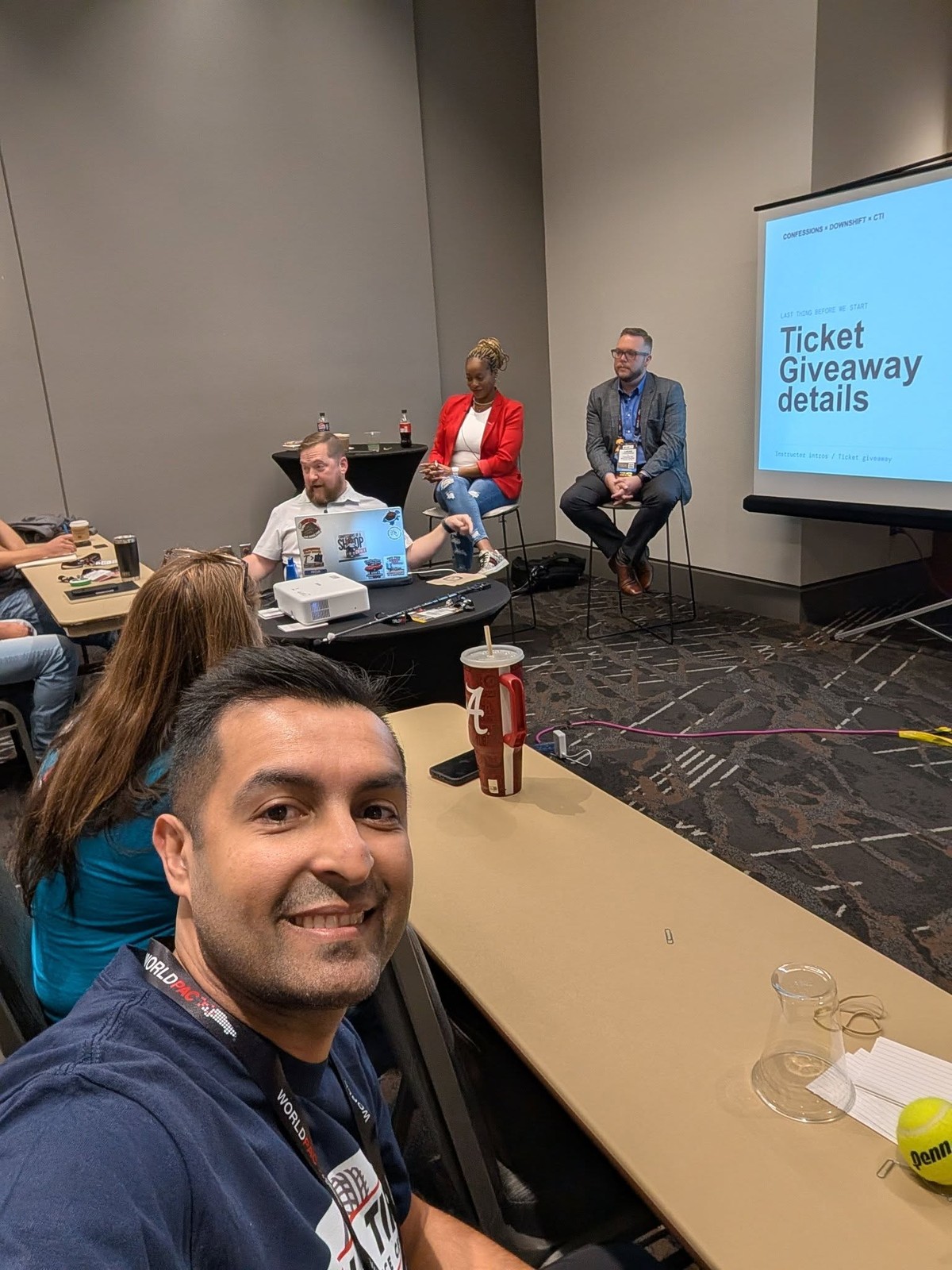
So who won? Nobody. Three people who can light up a comment section in minutes spent three hours proving there’s no single right answer, just the one that fits your shop. Take care of your people, your community, and your margin. After that, stop refreshing the Facebook page of the shop down the street.
There’s more than one way to skin a cat. Pick one. Pick three things to change. And don’t let Monday eat them.
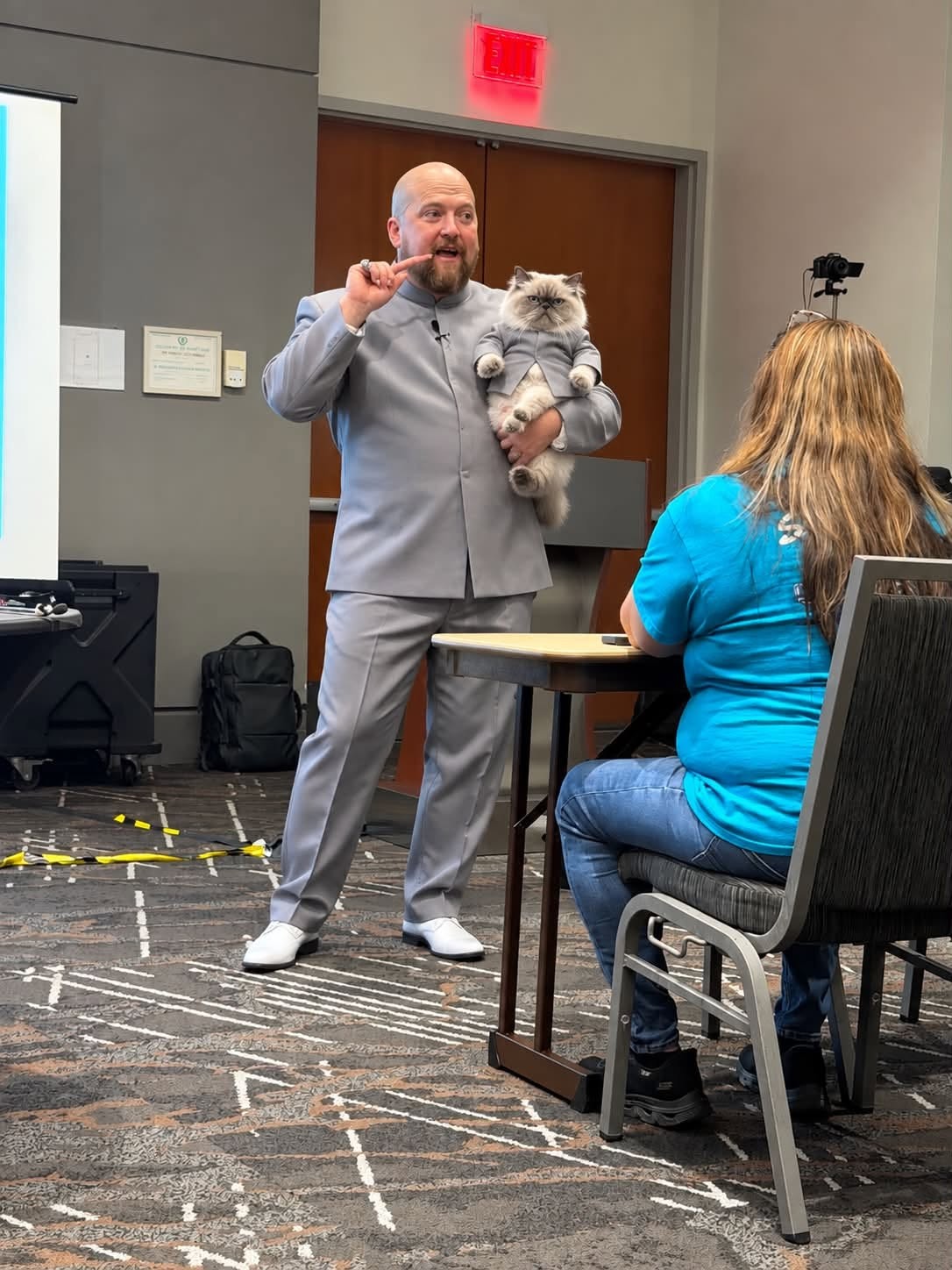
Thanks to Mike Allen (CarFix), Lucas Underwood (L&N Performance Auto Repair), and Tonnika Haynes (Brown’s Automotive) for running the room, and to every owner who said their numbers out loud. Extra thanks to Aniz Lavji for the notes that caught what we missed; you can find him on Shop N Tread. We’re definitely leaving people out.