The Shop Owner's Guide to the AI Galaxy: Is AI Recommending Your Shop?
Chapter two. Grab your towel. This time we are finding out whether the robots are already sending you customers.
Here is something that is happening right now, whether you are watching it or not.
Somebody in your town picks up their phone, and instead of typing “auto repair near me” into Google and scrolling, they just ask. They ask Copilot, or ChatGPT, or the little assistant baked into their browser, “who is a good honest mechanic near me?” And the AI answers them. Not with ten blue links. With a short list of actual shops, by name, like a friend would.
That is the whole game now. When the AI builds that answer, it pulls from real pages on the web and uses them as its sources. If one of those sources is a page on your website, congratulations, you just got recommended to a buyer at the exact moment they were deciding where to go. No ad. No click on a search result. Your name, in the answer.
That “your page got used as a source” moment has a name. It is called a citation. And until recently there was no good way for a normal shop owner to see it happening. Now there is, it is free, and this chapter is about setting it up.
First, the part nobody tells you
Getting cited by AI is not a switch you flip. There is no button, no plan, no secret line of code that makes ChatGPT start naming your shop.
What actually happens is quieter. When an AI decides which shops to name, it leans on what it can find out about you across the whole web. Your website, sure. But also your Google Business Profile, your reviews, the times people mention you, the places your name shows up. It is trying to answer one question: is this shop real, known, and trusted enough that I can put my neighbor in their bay without looking foolish?
That is a branding question. It always was. And it is worth being honest about where we come in, because this is our actual business: the reason social media matters here is not some trick that flips the citation on. It is that social is how a shop becomes known and talked about at scale. The stories, the reviews people leave after they see you, the neighbors who now recognize your name. That is exactly the pile of “this shop is real and people like it” that an AI reaches for when it decides who to recommend.
Same brand game your shop has always played. New field to play it on. The tool below just lets you finally see the scoreboard.
Meet Clarity
Microsoft Clarity is a free analytics tool. People mostly use it to watch how visitors move around their website, which is genuinely useful, but that is not why we are here. We are here for one tab inside it called Citation, under a section called AI Visibility.
Here is exactly what that tab shows you, in plain terms:
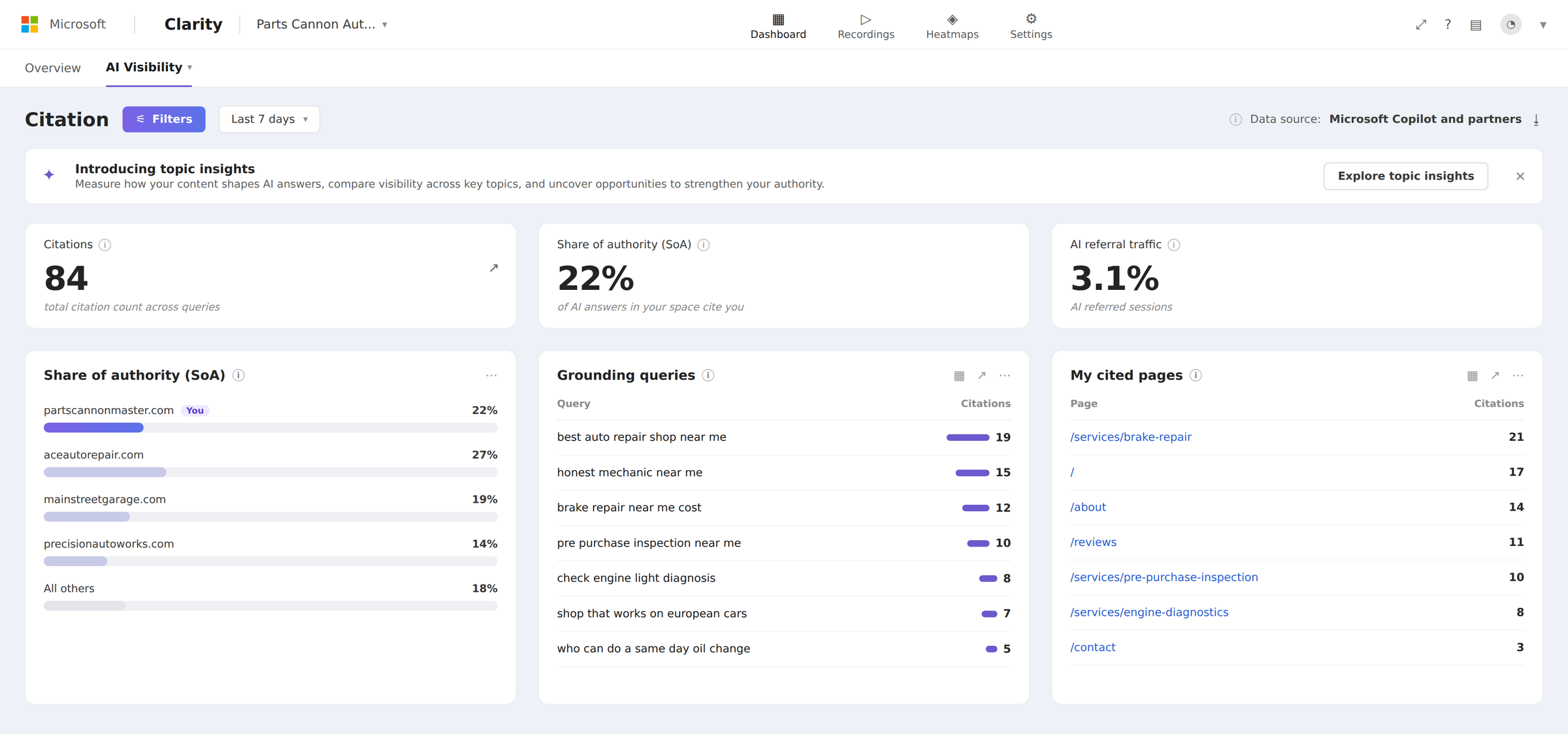
- Citations. How many times your pages got used as a source in an AI answer.
- My cited pages. Which of your pages got pulled in. Your brake service page? Your reviews page? Your homepage?
- Grounding queries. The actual questions people asked where your page ended up being a source. This is the good stuff. It is a peek at what your future customers are typing.
- Share of authority. Of all the AI answers in your space, how big a slice cites you versus everybody else in town.
One honest caveat, because we would rather you trust this number than be wowed by it. Clarity’s citation data comes from Microsoft’s corner of the AI world, which it labels “Microsoft Copilot and partners.” That covers a real and growing chunk of what is out there, but it is not every AI tool on earth. It is a window, not the whole sky. So read it as a strong signal and a trend line, not a full census. If Clarity says you are getting cited, you are almost certainly getting cited even more than it can see.
Setting it up
The screenshots below use a made-up demo shop called Parts Cannon Auto Service so we do not have to blur anything. Your version will have your name on it.
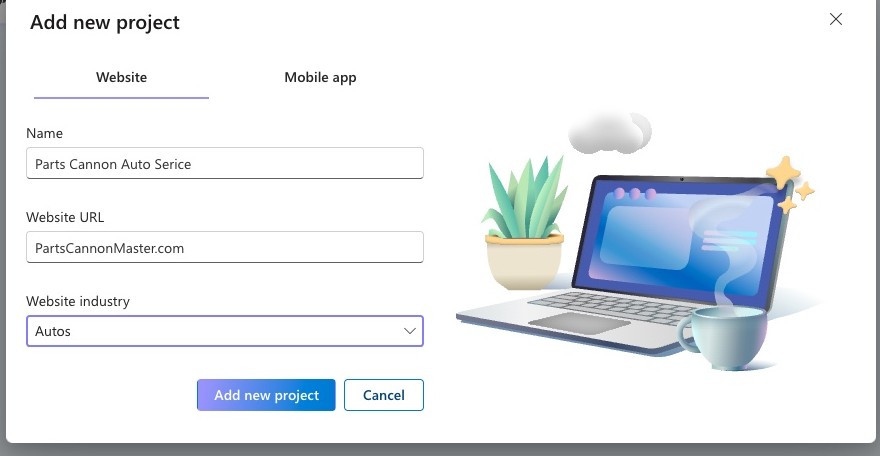
Step 1: Make a project
Sign in at clarity.microsoft.com, click New project, and fill in three things: a name, your website address, and your industry (yes, “Autos” is right there in the list).
Step 2: Get the tracking code onto your site
Clarity needs one small snippet of code living on your website so it can start listening. It hands you three ways to do that, and which one you pick depends entirely on how your website gets updated.
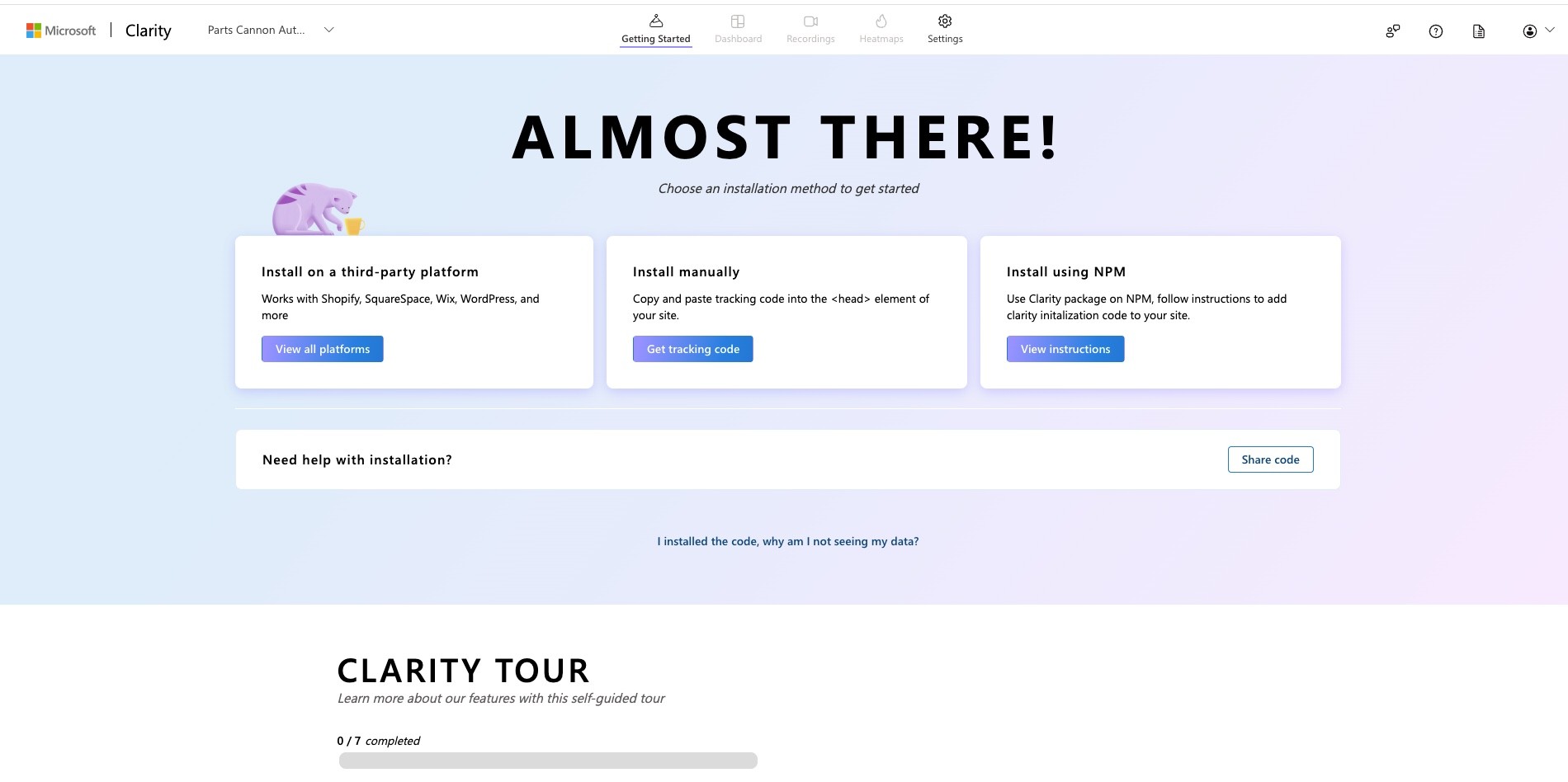
If someone else runs your website (which is most shops, and completely normal), you do not touch code at all. Click Install manually, copy the tracking code, and send it to whoever manages your site. Your web person, your agency, your marketing company. The message is short: “Please paste this into the head of our website.” That is a request they have handled a thousand times. It takes them two minutes.
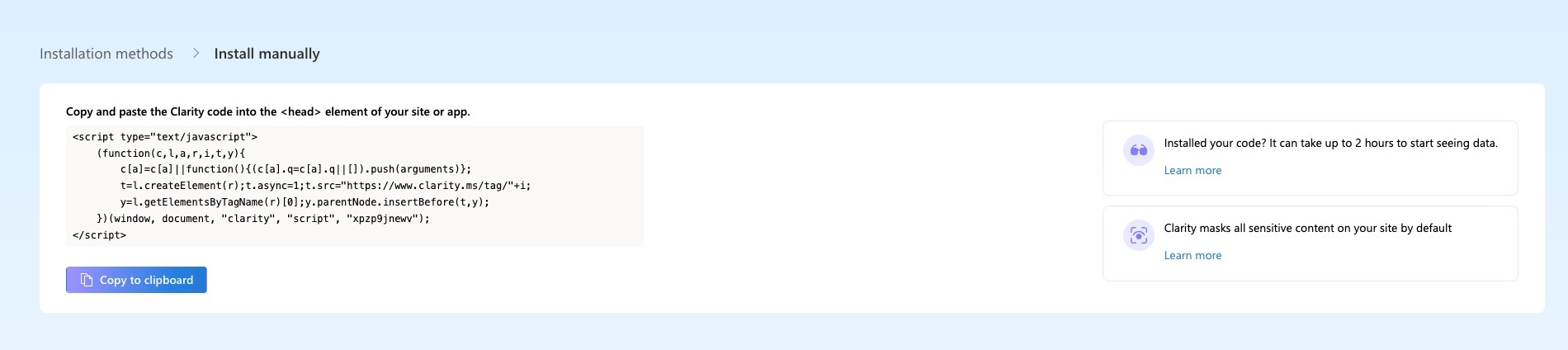
If you manage your own website (a few of you do, and if you are using Claude to make your own updates, this is you), you can do it yourself. Either use the third-party platform option if you are on something like WordPress, Squarespace, or Wix, or paste that same snippet into the <head> of your site by hand. If you want, hand the snippet to Claude and say “add this to the head of every page on my site,” and let it do the pasting.
Either way, same snippet, same result. One lives-on-your-site piece of code.
Step 3: Wait
This is the hardest step, which tells you how easy the rest was. Basic data shows up in a couple of hours. The citation numbers take longer, because they only appear as people actually ask AI tools questions and your pages get used to answer them. Give it a couple of weeks before you judge anything. Go run your shop.
Reading the scoreboard
Once it has had time to collect, the Citation tab looks like this. This is where it gets fun.
Read it left to right and it tells you a story.
The big numbers up top are your headline. Citations is how many times AI leaned on your pages. Share of authority is your slice of the pie against the other shops in town, which is the closest thing here to a “how am I doing versus the competition” score.
Grounding queries is the part to actually sit with. Those are real questions, in real people’s words, where your shop showed up as a source. “Best auto repair shop near me.” “Honest mechanic near me.” “Brake repair near me cost.” That is not guesswork about what customers want. That is the question, written down, right before the AI pointed at you.
My cited pages tells you which pages are doing the heavy lifting. If your brake service page is getting cited but your homepage is not, that is a signal about where your credibility is landing, and where it is not yet.
What to do with all this
The honest answer is that seeing the scoreboard is step one, and moving it is a different job. If your share of authority is thin, or your name is not showing up in the questions that matter most in your town, that is not a Clarity problem you can fix inside Clarity. It is a brand problem. It means the web does not yet know enough about you for the AI to feel safe recommending you.
Building that presence is the thing we actually do. Not AI citations. We would be wary of anyone who sold those, because nobody controls what the machines say. What we build is the brand underneath: the story, the reach, and the reputation that make a shop worth recommending in the first place. Getting cited is a byproduct of that, not a lever we pull. If you want an honest read on how known your shop is today, and what it would take to grow that, this is the part where we tell you to reach out to us. Not for a pitch. For a look at how visible your shop really is out there, and where the gaps are.
Set up Clarity first, though. Even if you never call us, every shop owner should be able to see whether the machines are recommending them. Now you can.
Until next time. And, as ever, Don’t Panic.